Save Up on Milk But Keep Your Baby Safe

 
As we all know, baby milk formula takes big part in the family budget. And as much as we want to save, the child’s welfare comes first, always.

Wondering how can you keep your baby safe and healthy and save a lot in your budget? Note of the following:

Properly prepare the formula. Make sure to wash your hands thoroughly with soap and warm water. Wash the top of the formula cans with soap and warm water, rinse well and dry and clean the can opener. Be aware of the water you will use. You may consider using purified water to be sure. And more importantly, read the directions carefully. Make sure to follow the measurements precisely. Under diluted formula may lead to dehydration while over diluted formula can affect the baby’s growth and proper nutrition.

Do not force feed
. You will definitely know when your baby isn’t hungry anymore. When the baby is satisfied he might turn his head away from the bottle. However, if there is still formula in the bottle never force him to feed for it might lead to overfeeding. It can make him uncomfortably full.

When your child didn’t finish feeding formula within an hour, toss it. Refrigerating and reheating leftover baby milk formula is a big NO. It’s because of the bacteria from his mouth that can seep into the bottle and contaminate the formula.

When you’ve prepared a bottle to use later, putting labels could be helpful. For a mixed powder or liquid concentrate formula, immediately refrigerate the closed bottle. It can be used for 24 hours. While, ready-to-use (premixed) liquid formula can be used up to 48 hours. Label the bottles with date and time of preparation.

Babies can get sick because of contaminated formula. And as prevention is better than cure, there are some precautionary measures you can do to keep your child healthy.

Knowing these, you are not only keeping your child healthy and happy—you are also able to save much from your budget.

------

Want to save more? Here are some FREE Milk Samples from various brands. 

Taking Changes, Little by Little


Change is the only constant thing in this world.

You have read this before, for sure. As a new mum, you have probably embraced the fact that you have just started a new chapter in your life. And to realize that in the next few days or weeks, another change will soon come over you.

Right when you’re getting used to giving infant formula to your child---your Mum or in-law suddenly just told you about getting rid of that infant formula and start giving your child solid foods and another milk supplement.

That change is growth. Your baby is growing into a toddler. Just like when he was a little baby in your arms, he equally needs the right milk formula as time passes by.

In the first 12 months, a baby’s diet is starting to mature to their nutrient-and-vitamin-rich formula routine. This is the time when your child is under the developmental milestone—the toddler stage.

A toddler is a child 12 to 36 months old. During this stage, toddlers may show independence, can recognize themselves in the mirror (and bring laughing moments at home), and can imitate behaviour from others. They take their first step up unto the countless times they fall and stand again.

Being in the most rapid stage of development, toddlers need around 4.5 times amount of iron as an adult male. Calcium and vitamin D are also needed for normal growth and development.

Yes, your precious little one needs special amount of care during this stage. That’s why choosing for a toddler milk is understandably challenging.

In choosing milk formula, check on the nutritional information. Some of the needed minerals and vitamins for developmental milestones are the following:

Iron. Supports normal cognitive development.

Calcium and Vitamin D. For growth and bone development.

DHA/EPA (Omega 3). Powering the brainpower.

How to Avoid The Risks of Formula Feeding


When breastfeeding is not exclusively been practiced during the development stage of babies aging from six months to one year old, follow on milk formulas are generally used. However, World Health Organization requires parents that they must be fully informed of the hazards of the improper use of infant formulas. Bottle-feeding using milk formulas must be done with extra care and the amount of feeding must be monitored to avoid the risk that comes with it.

Milk manufacturing companies may not have told the public about this, but there are some risk for both babies and mothers who are doing formula feeding the wrong way.

Basically, the first six months of your baby must be exclusively aloted for breastfeding. If you are having trouble of doing so, you must contact your doctor or pediatrician first for recommendations. Only then can you use the right follow on milk formula for your baby.

Note: You can read also our post about Breast Feeding Vs. Formula Feeding

The Risks
 
According to Infact Canada, there are 16 risks of formula feeding for infant and children, and there are 8 risks for mothers.

For Infant/Children
Misguided or improper use of formula milk can increase the chances of having the risk of asthma, allergy, reduced cognitive development, acute respiratory disease, altered occlusion, infection from contaminated formula, nutrient deficiencies, childhood cancers, chronic diseases, diabetes, cardiovascular disease, obesity, gastrointestinal infections,  mortality, otitis media & ear infection, and side effects of the environmental contaminants.

Sounds very scary, but with the proper help from your nutrion consultants, mums who can't do breastfeeding can still give their child the right milk and other source of nutrition.

For Mother
Not only the infants are at risk but mothers as well from breast cancer, being overweight, ovarian cancer, osteoporosis, reduction of natural child spacing, rheumtoid arthritis, stress & anxiety, and maternal diabetes.

Much scarier isn't it? Giving our babies the nutrients they need have these risks, but not all of them are all found in milk formulas. Often times, lack of guidance from a nutrionist or support from motherhood communities causes those risks. Stress can also add up most especially for first time mums.

So how can we avoid those risks?


It is no doubt that breast feeding is the best for babies up to two years of age, but with those who were unable to do so, leads them to find resource from infant formulas. Although formula fed babies have higher risk of getting those diseases mentioned above, but with careful and proper nutrional support, it can be lessen and avoided. Follow these few tips on how we can keep our babies risks free!.

Prepare the milk formula the WHO way:

If you have recently decided to bottle-feed your newborn, you are probably full of questions about toddler milk formula preparation, feeding positions, sanitizing utensils, and burping techniques. Here are a few guidelines on how to feed your toddler milk formula successfully.

Note: You can read the full guideline here:  Parent's Guide for Giving Toddler Milk Formula

Amount and scedule of formula feedings 


Your infant’s feeding habits may not match a fixed guidelines precisely, and rarely will your baby wake exactly 3 hours after the previous feed is finished. However, as long as they are feeding well and gaining normal weight, they are definitely getting the amount they need. 

Note: You can read the full guideline here.

Know the right milk in every stage of development

Baby formulas are categorised into three stages to match the developmental needs of babies. These are:

  • Stage 1 fmilk or babies below 12 months.
  • Stage 2 formulas are given to babies after 6 months. They are also known as follow on formula.
  • Stage 3 onwards is given to babies from 1-year-old onwards and it is also known as growing up milk or toddler milk formula.
These were just some of the practical tips on how we can avoid these risks, make sure to keep you babies well fed and always ask your nutrion consultant before giving milk formulas. Some mums still look for the best or nearest substitute for breastmilk. Remember that you and your babies health must be your first priority.

Let us what your thoughts are by writing them down below the comment section.

Regards,
SG-Mums


When do I start weaning my baby?


Most first time mums have this question when thier babies turn 4 months old. Weaning generally means the process of stopping your baby from breastfeeding or bottlefeeding and the start of introducing other source of nutrition.

One of the worries is that the time mums started weaning would decrease their bond with their babies. However, study shows that ample evidence suggest that breastfeeding can improve child neurodevelopment, but more research is needed to establish this claim.

When can we really start weaning?

Basically, all babies must really be introduced to other source of nourishments, you cannot let your baby do that for years. When he starts to develop and grow, his appetite for food develops also. Usually around 4 to 6 months, our babies starts to show signs of losing appetite or interest in nursing.

Early signs of weaning shows when your baby grow more active and don't want to stay still long enough as when he/she is being nursed. This could be your opportunity to introduce solid foods.

But for some mums, especially those that needs to return to work or will have to start weaning gradually, they may decide to do so even though their baby seems not to show the signs of being ready for weaning. Suplement their nutritional needs by giving follow on formula milk. Keep on observing the signs and then start introducing small amounts of baby foods.

There are some ways on how to start weaning.

As your baby develops his appetite for other source of nutrition other than milk, you can start weaning by skipping nursing time (either breastfeeding or bottle-feeding) and introduce baby food. Remember that doctors suggests that solid foods is advisable to introduce for 12 months old and onwards. If skipping cannot be helped, you can reduce the amount so that your baby can adjust gradually.

In conclusion, weaning can work bothways, it's either you wait for your child to become more active and starts to loose appetite from being nursed or gradually introduce him to baby food from 4- 6 months old onwards.

Remember that weaning also depends on your baby's condition and nutritional needs, always consult your pedia for more medical help and advise. 

Which Milk Is Better for Toddler?


If you are ready to discard the breast pump or the pricey formula, you are right on schedule. 12 months is the legal drinking age, for cow’s milk, that is. So now that your child has turned one, he is ready for the big switch. However, the question is, which kind of toddler milk powder should you choose?

The common belief was that 1 year old toddlers should get whole milk because the fat it contains was considered important for proper brain and nervous-system development. 2 years old, whose bodies are more developed and no longer need the extra fat, were supposed to move on to two percent or one percent milk. Still at times, they are a changing. Nowadays there is so much concern about childhood weight and rising cholesterol levels that experts have a new message regarding toddler milk.

The present message is that because toddlers get a lot of saturated fat from other sources, milk fat is not as important as we once believed it to be. As a matter of fact, research shows that toddlers who drink lower-fat milk develop just fine. Therefore, with this in mind, here is a new master plan on toddlers' milk.

You Can Start Your 1-Year-Old on Whole Milk If:

She is at a healthy weigh: this means that if she is below the 85th percentile on the body mass index charts.

There are no history of obesity, high cholesterol, or heart disease in your family.

Start Your 1-Year-Old on Reduced-Fat Milk If:

Her body mass index is above the 95th percentile.

High cholesterol and heart disease run dangerously through your family tree.

When your baby is at two, ask your pediatrician whether your infant should keep taking reduced-fat milk or switch to one percent.

And What If Your Toddler Doesn’t Like Milk?

If your kid doesn’t’t like milk, you may have to consider some sneaky tactics to help her get used to it. You can try some of the following tricks:

Try mixing milk with formula or breast milk, then increase the milk into the mix gradually until all you have is straight up milk.

Also, experiment with different temperatures as your little one may like the milk better if it is warm as opposed to cold.

You can also toss some milk in a blender with your toddlers’s favorite fruit to change the color, flavor and texture. Giving your baby a “true blue brew” or a “princess pink drink” could make all the difference. Plus, this plan will also enable you to kick up the fiber and vitamin content.

However, don't fret if your independent-minded toddler is determined to reject milk. And don’t ever force it. If she is getting healthy fats from other sources, just make sure she also gets vitamin D from a multivitamin and calcium from other foods, such as dairy or calcium-fortified breads, cereals and orange juice.

How to Buy Top Baby Milk Powder


If you don't breast-feed and you need to supplement breast-feeding, or decide to wean your baby before age 1, you will need to give him baby milk powder.

Infant milk formulas are improving continuously to create nutritional profiles as close to that of breast milk. Various brands stress a different mix of protein, fats macro and micronutrients and carbohydrates. With so many brands in the market, it can get really confusing for moms. You don’t have to worry anymore. Here is compiled list of the top baby milk powder for babies:

Earth’s Best Organic Infant Formula:


This is a formula rich in high-quality protein, mineral, vitamins, and essential fatty acids. It also contains DHA and ARA, nutrients which are naturally available in breast milk. DHA and ARA promote the baby’s eye and brain development. Although, its whey and casein ratio is similar to mother’s milk. Earth's Best Organic Infant Formula uses organic glucose solids and organic lactose as its carbohydrate source and it doesn't contain antibiotics, growth hormones, steroids or any harmful herbicides or pesticides.

Baby’s Only Organic Dairy with DHA & ARA Formula


Baby's Only Organic Dairy with DHA & ARA Formula should be your pick if your child is prone to allergies. This formula is totally gluten free and it contains no corn syrup or other GMO ingredients. Also, it contains DHA and ARA lipids, derived from the egg phospholipids which gives the formula a more natural fatty acid profile. This brand of formula also claims that it does not contain any artificial growth hormone, antibiotics, and steroids. .

Similac Go & Grow:

This is another formula to balance your baby’s diet. Similac contains omega 3 and 6, therefore you can trust that you are feeding your little one a formula that is closest to your milk. This formula is one of the few formulas that have Lutein and Galactooligosaccharides. These nutrients are nutrients that your baby can get only from breast milk. It is gluten free too, therefore you don't have to worry for your allergy-prone children.

Gerber Good Start Gentle Powder Infant Formula

You should pick Gerber Good Start Gentle Powder Infant Formula for your baby if she has a sensitive stomach. Because babies' digestive system develops throughout the first year of life, it is essential to give the nutrition that it gentle on your baby. This Infant Formula provides the nutrition of breast milk and at the same time, is being gentle on your infant’s developing body. The small proteins are easy to digest and also promote soft stools.

Enfamil Infant Formula

This is one of the leading brands in infant formulas. It is often recommended by pediatricians to mothers because it has been the closest ever formula to breast milk. This formula claims to meet the nutritional needs of babies until they are 12 months. It also have dual prebiotics which help babies support their natural defenses. Furthermore, the presence of nutrients like choline and DHA plays a vital role in your baby’s brain development.

Why Give Growing Up Milk Formula?


At 6 months, your baby may be trying a lot of new things, from sitting up, to using sippy cup and also trying solids. After all, searching out new hiding places, learning to walk, and learning to talk takes a lot of concentration and skill. At this stage, your kid might be more interested in playing with his food than eating it.

Nevertheless, ensuring that your toddler’s nutritional needs are met is important. Toddlers need a diverse, balanced diet to ensure they get the vitamins and minerals needed. Just 2 beakers a day of growing up milk contain about the right percentage of toddlers' daily vitamin D.

For toddlers between 6 to 12 months, milk remains an essential part of their diet, especially during weaning.

Between 1 to 3 years, it is important to make sure that your baby gets the nutrition needed to help them keep up with their adventures.

Do not forget milk plays an important role in weaning and if you use formula milk, you can try stage 2 follow-on milk.
Iron, in growing up milk, help in supporting normal cognitive development. This makes iron-rich foods a vital part of their weaning diet.

It is important to note that if your baby is less than a year old, don't feed her growing-up milk because growing-up milk is suitable only for toddlers aged between one year old and three years old.

Vitamins, minerals and prebiotics are added to growing up milk. Also, it contains higher levels of iron than other infant formula milks. Because of this, you may want to feed it to your infant once she is a year old. Nevertheless, at this age, your baby should be getting all the nutrient she needs from a combination of the breastmilk or infant formula milk and solid food.

Growing-up milk is no better for your child than cow's milk. And if you and your toddler are happy to continue breastfeeding, that is fine, too.

When your baby is one year old, you can give her cow's milk as a drink. By this time, your baby will be gaining a big part of her nourishment from solid foods. As long as she is having a variety of food, the mom should be getting all the minerals and vitamins she needs.

Still, it is easy for small children to miss out on important nutrients as they get used to eating regular meals.

If your little one is having vitamin drops and eating well, then she won't be needing growing-up milk. Even though growing-up milks have more nutrients, they also contain high in sugar and this could damage your child's teeth and her general health in the long-term. If you are unsure about feeding supplements or growing-up milk, then speak to your pediatrician.

In all, giving your kid growing up milk depends on your little one and not just a decision you can make based on people's opinion.

Breastfeeding Versus Formula Feeding


These days, the age-old question of breastfeeding or bottle-feeding is even more relevant than it has ever been. It is a common debate we see on social media that continues amongst Singapore mums. The recurring battle between bottle and breast has many mums divided, especially when the end of the maternity leave approaches and it's time to go back to work. At the end of the day, the decision lies with the parents to choose what makes sense for their own situation.

But what then is a mum to do if she has to go back to work and still decides to breastfeed? Apart from bringing her baby to work, most mothers will have to introduce the bottle to their baby. The bottle is quite convenient because anybody can help in feeding the baby whether the supply is from breast milk or a formula. For sleep deprived mums, another helping hand can make a huge difference to her happiness and wellbeing, especially if she is going back to work.

Breast pumps are a great solution for mums who choose to continue to give their babies breast milk. Breast pumps are devices used for extracting milk from the breast of a woman who is lactating. There are so many options on the market in Singapore, it’s important that mums look around to find the right pump for her. If you are going back to work, and you are planning on feeding your baby breast milk through a bottle, it is advisable to practice pumping for a few weeks before you relying entirely on it as a feeding method. Doing this gives both mum and baby some time to get used to the bottle.

One other advantage of the bottle is that it can be used as a guide for parents to know how much the child is taking, which is a very important information to have when visiting your pediatrician or measuring your baby’s development. Many working mums usually opt for a combination of the two feeding methods.

Breastfeeding can be quite tricky when mums work as it is obvious that only the mom can feed the baby. Actually, this over-reliance can hamper the baby's appetite, especially if they start rejecting the bottle. This can, of course, work in both ways as your little one might have nipple confusion once the bottle bad been introduced to them. Meaning that once a bottle is introduced, the infant may reject the breast totally in preference to the bottle.

Ultimately, one of the main reasons why some women choose to breastfeed is because of the undeniable bond between baby and mummy that comes with breastfeeding – and with the increasing popularity of attachment parenting. It is a very attractive option for many mothers. The warm, body to body contact is something that can't be replace.

Above all, what we feed our baby is a largely personal choice and there is no perfect solution that can work for everyone. The only thing that is important is to make sure that both the mum and baby are happy and are getting enough nutrition.

Amount and Schedule of Formula Feedings


Knowing the amount of formula to feed your baby can be very difficult to gauge, especially if you're a new mom with no prior experience and in the early stages.

Every baby is different and their appetites differ largely.

Your infant’s feeding habits may not match a fixed guidelines precisely, and rarely will your baby wake exactly 3 hours after the previous feed is finished. However, as long as they are feeding well and gaining normal weight, they are definitely getting the amount they need.

If your little one is premature or of a low birth weight, please note, that their feeding requirements will be different. Your consultant or midwife will be able to advise you about your child’s unique needs.

From when your baby is 2 weeks to 6 months, expect your bottlefeeding routine to consist of around 5-6 feeds daily.

After the first few days of starting, your formula-fed newborn will take from 2-3 ounces of formula per feeding and he will eat every 3 to 4 hours on average during her first few weeks.

If your baby sleeps longer than four to five hours during the first month, and starts to miss feedings, ensure you wake her up and offer a bottle.

By the end of the first month, she should be able to take at least 4 ounces per feeding, with a fairly predictable schedule of feedings about every 4 hours.

By 6 months, your baby can consume 6 to 8 ounces at each of 4 or 5 feedings in twenty-four hours.

Ideally, your infant should take in about 2 1⁄2 ounces of formula daily for every pound (453 grams) of her body weight. However, he will probably regulate his intake from day to day to meet his own specific needs. Therefore instead of going by fixed amounts, try to notice when he has had enough. If he becomes easily distracted or fidgety during a feeding, he is probably finished and if he drains the bottle and still continues smacking his lips, it means he might still be hungry.

However, there are high and low limits. Most babies are satisfied with 3 to 4 ounces per feeding during the first month and they just increase that amount by 1 ounce every month until they reach a maximum of about 7 to 8 ounces. If your little one seems to want more or less than this consistently, then discuss it with your pediatrician. Ideally, your baby should drink no more than 32 ounces of formula in 24 hours.

At first, it is best to feed newborn on demand, or whenever he cries because he is hungry, and as time passes, he will begin to develop a fairly regular timetable of his own. In the same vein, as you become used to his signals and needs, you will be able to schedule his feedings around his routine.

The most essential thing to note, whether you breastfeed or bottlefeed, is that your infant’s feeding needs are unique. Therefore, no book can tell you exactly how much or how often he should be fed or precisely how you should handle him during feedings. All these you will discover for yourself as you and your little one get to know each other.

Follow On Milk After Breastfeeding


It is a commonly known fact that breast milk is the best for babies, and childcare practitioners and health organizations encourage moms to breastfeed their babies for as long as they can. However, there are situations where mums have no other choice than to give their babies formula and once you have decided to take the formula route, one of the hardest task at hand is picking a brand. If you are a mum looking for the best follow up formulas for your baby, it can be quite daunting and overwhelming. Below are some of Singapore's best formula brands.

ENFAMIL

Enfamil is the formula of choice when most mums were asked to recommend the best infant formulas. Enfamil has a range of products that tailor-made to suit the nutritional needs of infants and older kids equally. Enfamil A+ Stage 2 is appropriate for babies from 6 to 12 months and is fortified with ARA and DHA. These are very essential nutrients for eye and brain development in children. Another nutrient included in Enfamil is Choline which promotes overall mental function and there's also GOS, which is a prebiotic. This infant formula also contains antioxidants like Vitamins C and E.

Nestle NAN


Nestle NAN Pro 2 is specially designed for babies 6 months and older. It includes BL Bifidus, a blend of naturally active bacteria which helps in promoting a healthy intestinal tract. Also, it contains two essential fatty acids, namely DHA and ARA, and also OPTI PRO2, which helps to make sure your little one gets the proper amount of protein needed for his development.

Similac


Similac is the next infant formula on our list. It has a range of infant to toddler formulas. It also contain a host of nutrient blends like some Immunify Ingredients such as Eye-Q Plus Intelli-Pro and ProCalci Formulations. These blend of nutrients help in fulfiling your baby’s specific nutritional needs. And when it is compared to other formula brands, Similac doesn't contain palm olein oil, however, it contains more than 80% more added Lutein. Lutein is an essential nutrient for eye and brain development.

S-26’s Promil Gold

S-26’s Promil Gold is a follow-on formula for babies of 6 months and older. This formula has a unique blend of nutrients which are specially tailor-made to supplement your kid’s nutrition. These nutrients are oligofructose, which is a prebiotic that promotes a healthy digestive system in infants, taurine, which helps in developing overall mental and physical health of babies, and inositol which supports important biological functions. There are others such as AA, DHA and choline which helps with mental health and calcium which helps to strengthen bones in babies.

Dumex’s Mamil Gold

Mail Gold has a range of infant formulas suitable for 0 to 6-year-olds. Dumex’s Mamil Gold contains the highest amount of prebiotics amongst all the follow-up milk formula brands in Singapore. It also has a specialized blend of nutrients which is a perfect supplement for babies. Mamil Gold also contains Omega 3 & 6, DHA & ARA, taurine and choline, vitamins A, C, D & E, calcium, iron and phosphorus, among others.

When To Switch To Toddler Formulas


For babies that are breastfed, the nutrition in the breast milk changes throughout the nursing experience. Therefore, breastmilk is different when the baby is 6 days old, 6 months old, and 18 months old. These changes usually happen gradually over time. In the same vein, formulas come in different stages in order to address babies' changing nutritional needs as they develop.

Infant formulas are tailor-made to meet the nutritional needs of most infants during the first year. Most kids do better with a drink that isn't quite so rich in the second year.

Toddler formulas usually have most of the same vitamins and minerals in infant formulas. However, the main difference between toddler and infant formulas is that the former contain a greater amount of calcium and phosphorus. These formulas are designed to provide the higher phosphorus and calcium levels needed by kids as they grow, same as the ones found in whole milk.

The benefit of toddler formulas over whole milk is that most of them contain DHA which is an important omega-3 fatty acid that can also be found in breastmilk. One way or another, getting DHA in a baby's diet seems very important in the first two years. If you notice that your child needs formula after the first year, you can switch to a toddler formula to accomplish this as this will provide her with the extra calcium and phosphorus needed.

Also, if you are concerned that your toddler is not eating a proper amount of solids, toddler formula can provide most of her nutritional needs while still experimenting with solid food.

For most kids, it is best not to force them to eat with moving the spoon like an airplane or with music or any sound effects. Kids do have an internal mechanism that tells them how much to eat that you want to keep intact. But if you suspect it is not intact or there are serious food allergies ccompliationz, it is usually best to work with a feeding specialist so as to learn how to encourage feeding while you are still keeping your baby’s motivation strong.

Your kid may be fine with 16 ounces of formula a day now or she may want 24 ounces. But if she consistently takes more or less than that, tell your pediatrician so as to be sure she is getting a good amount for her specific situation. You will get to see on the charts just how she is growing at the one-year physical. And one way or the other, your little one is on the doorstep of toddling into a whole new stage of her life.

It is okay to continue the infant formula, as long as it doesn't contain too many calories for your baby. It is okay for her to eat as much or as little solids as she wants. It will vary day by day.

Best Formula For Breastfed Babies


If you are a parent, then you have already heard the news, breastfeeding is the best option for your baby. But sometimes, it is difficult, or even near impossible, for a woman to breastfeed hundred percent of the time.

Reasons for choosing to supplement breastfeeding with formula are different for each family. It may be a medical or physical reasons that prevents some women from producing an adequate milk supply, some may be returning to work and others may have babies with special dietary needs.

Which ever reason it may be, you have to first discuss it with a pediatrician so as to make sure it really is the best option for baby. However, it should not be an issue that will cause a nursing mother any guilt. The first responsibility of a mother is to make sure her baby is well-fed. In addition, it is also important to know which formula to use when supplementing the breastfed baby.

There are various brands and types of formulas available, so it may seem difficult to a first-time bottle-feeder when faced with different selection. Because all babies are different with unique needs and likes, this is a basic guide to some formula options on the market.

Powdered or Prepared Formula

Before you begin searching for brands, it is vital to know how infant formula is sold, and why it matters.

Baby formula is generally sold in two different types, and these are powdered or liquid. Liquid formula is a pre-prepared kind of formula. It is easy to use, since all you have to do is pour out the exact amount you need without having to mix anything.

Usually, most hospitals prefer this liquid pre-prepared baby formula because it is more sterile. It is purchased in already packaged disposable nurser bottles, which allows for very little risk of contamination.

The biggest advantage of this type of formula is that it is very convenient. There is no need to worry about mixing the wrong amounts and this makes it very friendly for babysitters. Also, It is the safest option when there is no clean water and it can make traveling with baby stress free.

The disadvantage of liquid formula is that after it is opened, it has to be used very quickly. Plus it is more expensive.

Powdered formula is the more affordable option because it costs less per container to buy and it lasts longer after being opened.

It is very important to follow the exact mixing directions listed on the container when using powdered formula. When mixing the bottles, you must use sterile water and wash your hands before preparing the formula. You can pre-mix them and store them in the refrigerator once you know how many bottles your baby will use in a day.

Another type of formula that is less common is the concentrate. This requires mixing like powdered formula, but is in liquid form, which makes it neater than powder. The price is between powdered and liquid formula in most cases.

Stage 2 Milk Formula Brands Comparison in Singapore

Mummies! We may have a hard time choosing on which milk formula brand will not only fit our budget, but on the nutrional value it can provide our children. Escpecially now that according to Straits Times, the average price of milk powder cost up by 120% in 10 years. So we decided to do a comparison of the available brands in the market. We hope that this post will guide you on which brand is best for your young ones.


If your child likes the milk brand and their body does not reject it, better stick on it. Remember that the price does not dictate the amount of nutrients a formula can give, some may be cheaper but is better than the pricy ones.


Aptamil Stage 4 Toddler Milk Review


Milk formulas are usually made of cow's milk and they are specially made to meet your baby’s specific nutritional needs. Usually, they come in powdered form, ready to be mixed with boiled water and then given in a bottle to your little one. Also, ready-made babies' formula are available and they can be very useful if you are on the go and also during the night.

Aptamil® Gold+ 4 Junior Nutritional Supplement is a premium supplement for young children from 2 years of age and it is specially designed to help in meeting the dietary needs of fussy or active children whose dietary intake may not be adequate. It is formulated to support growing children when taken as part of a healthy and varied diet and is prepared as directed.

It contains the goodness of cows' milk & sixteen essential vitamins and minerals that will support normal growth and development.

It also contains Zinc which is necessary for normal immune system function and also Calcium and Vitamin D for normal teeth and bone structure.

There is also Omega-3 DHA fatty acid. Two serves per day of Aptamil Gold stage 4 formula provides at least 20-50% of the recommended dietary intake of 16 essential vitamins and minerals.

It contains Sucrose i.e table sugar, with no artificial colours.

There is also a hint of vanilla flavou added to it.

Ingredients:

Milk solids i.e whey protein, skim milk, and lactose, vegetable oils with soy oil, dried omega 3 and omega 6 LCP oils (fish oil [tuna], galacto-oligosaccharides (GOS) from milk,arachidonic acid oil, antioxidants [sodium ascorbate, ascorbyl palmitate, mixed natural tocopherols, dl-alpha-tocopherol]), sodium caseinate, long chain polyfructose, acidity regulator (potassium hydroxide & calcium hydroxide), emulsifier (soy lecithin), choline chloride, corn starch, taurine, probiotic (Bifidobacterium Breve M-16V), carnitine, inositol.

Vitamins: Vitamins A, B1, B2, B3, B5, B6, B12, C, D3, E, K1, folic acid, biotin, beta-carotene.

Minerals: Potassium, calcium, chloride, phosphorus, magnesium, sodium, iron, copper, zinc, iodine, selenium, manganese.

Nucleotides: Uridine 5’-monophosphate, adenosine 5’-monophosphate, cytidine 5’-monophosphate, guanosine 5’-monophosphate, inosine 5’-monophosphate.

Preparation Instructions

Make sure you wash your hands before preparing the formula.

Also, wash and rinse cup and all other utensils thoroughly.

Clean and sterilise all the utensils by submerging teats and bottles in water and then boil for five minutes.

Boil safe drinking water and then allow it to cool until lukewarm. Now measure the required volume of lukewarm water into a feeding bottle that has being sterilized.

Use only the enclosed scoop. Lightly fill the scoop & level off using the built-in leveller. Make sure you avoid compacting powder.

Be sure to always add one level scoop of powder for each 50mL of water.

After this, cap the bottle & shake briskly to as to dissolve the powder.

Test the temperature of the mixture on your wrist before feeding. immediately. It is safer to feed the baby Aptamil® Gold+ Junior Growing Up Formula immediately it is prepared.

Discard unfinished drinks. 

Most Common Problems for Babies Milk Transition


Most mums find it rather difficult to change from one milk to another due to fears that their little one will react badly. These fears are mostly brought about by different stories and testimonies from other mums or from different reviews about the product. However, know that babies react to formulas differently. That one baby doesn't like a formula does not mean that it is not good for another baby.

That said, mums should also know how to introduce a new formula to their baby as this will not only be helpful in getting the baby to take it, it will also allow the baby's system to adjust.

Here are a few tips that may help your baby adjust to a new formula smoothly and easily.

Do not do away with the previous formula. Make sure you have enough of your baby's previous formula on hand if possible, approximately 1 weeks’ worth, before you do the transition so that you can make the change to the new formula gradually.

Introduce the new formula gradually to your baby. Avoid changing completely to a new formula within just one day. It can help to offer one bottle of the new formula on the first day of changeover, and then use your baby's previous formula for the remaining feeds.

On the second day, offer two bottles of the new formula and then use the previous formula for the remaining feeds. Keep using this method until your baby has made the full transition to the new formula. Most times, thidcould take up to a week or more.

An alternative method you can use is to mix the two formulas together for several days before introducing the new formula only. It is always after to prepare a separate bottle of each formula (old and new) and then mix the two formulas into another bottle.

Ensure each formula is prepared according to the manufacturers’ instructions on the can.

You should also imbibe the following hygiene habits so as to protect your little one from illnesses like diarrhoea and the likes.

*Always wash your hands you prepare the formula and also wash and rinse cup and all other utensils thoroughly. *Sterilise all the utensils by submerging teats and bottles in water and then boil for five minutes.

*Boil safe drinking water to prepare the formula and then allow it to cool until lukewarm.

Also, ensure that the formula you choose is a suitable and is age appropriate choice for your baby.

For instance, if your baby is under six months old, choose a Stage 1 Infant formula suitable from birth as these tend to be dominantly whey.

For babies six months or older, you may choose either a Stage 2 Follow-on formula suitable from six months or Stage 1 Infant formula suitable from birth. These two choices are appropriate depending on your individual baby.

However, if you become concerned about any aspect of your baby’s health, make sure you contact your baby’s health professional for advice.

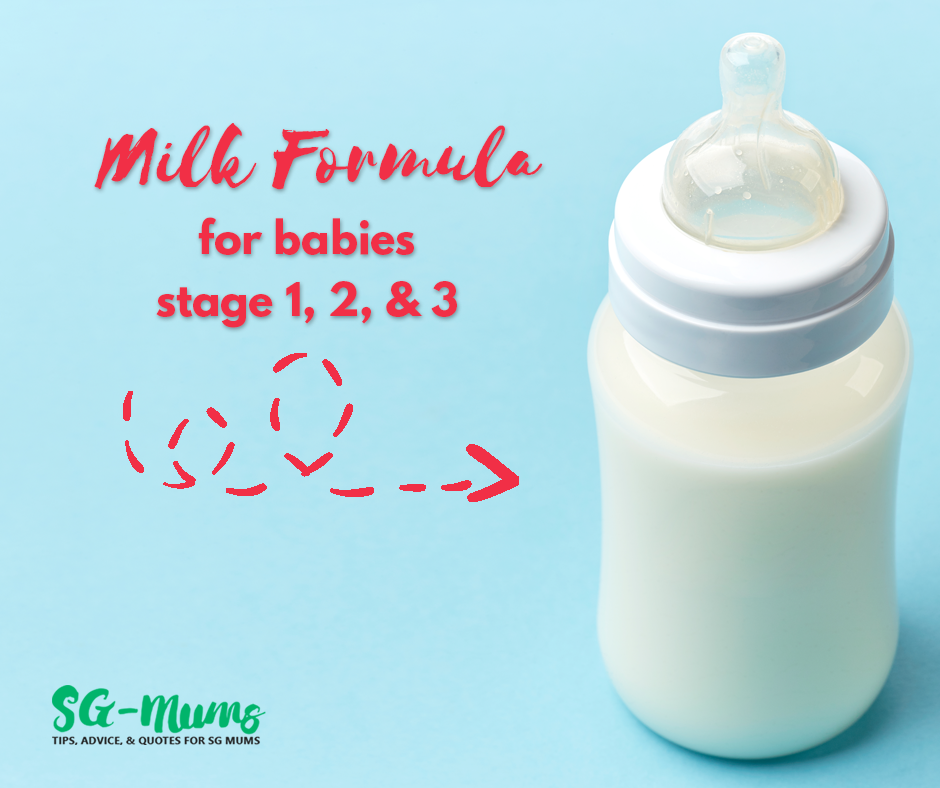
Milk Formula For Babies: Stage 1, 2 And 3


Baby formulas are categorised into three stages to match the developmental needs of babies. These are:
  • Stage 1 fmilk or babies below 12 months.
  • Stage 2 formulas are given to babies after 6 months. They are also known as follow on formula.
  • Stage 3 onwards is given to babies from 1-year-old onwards and it is also known as growing up milk or toddler milk formula.

Stage 1 formulas, also known as infant formula from birth
Most infant formulas available are based on cow's milk which has been significantly altered to make it nutritionally suitable for infants. They have been modified in such a way that they closely match the makeup of breast milk, therefore they sometimes referred to as "breastmilk substitutes". Its protein is made up of whey and casein. Infant formulas composes of whey dominantly just like breast milk which has a whey to casein ratio of about 60:40. It is easy to digest, which makes it suitable for babies up to one year old.

Stage 2 formulas


These formulas are for six months and older are called follow-on formulas. They are similar to Stage 1 formulas but they have a higher casein to whey ratio of 80:20. Stage 2 formulas can also contain different levels nutrients compared with stage 1 formulas, so they are e not suitable for babies younger than six months. Stage 2 formulas takes longer to digest, and is therefore suitable for baby’s growing appetite.

However, make sure that you offer your todfler solids from six months onwards, because they will need extra nutrition from food.

Note that you don’t have to change to follow-on at six months if your baby is happy and established on an infant formula, you can just continue using infant formula right up until 12 months

Stage 3 and 4 - Growing up milk

From 12 months onwards, your baby becomes a toddler. They are busy, active and need extra energy and nutrients to play and grow.

Once a child is over a year old, doctors and dietitians agree that a glass or two of fresh cow’s milk a day along with a balanced diet is all that is needed.

Cows’ milk can be your toddler's main milk drink, around 2-3 cups a day is enough for most toddlers. However, toddlers need plenty of iron rich foods in their diet so as to grow up healthy and strong, and also for learning and development. This can be a problem for some parents as their toddler may be struggling to get enough iron, most especially if he is a picky eater, doesn't like to eat meat or have small appetites. In such cases, you can remedy this with lots of patience, attention and love. Consult your doctor so that he can recommend a special growing up milk rich in iron for your child. Also, you can introduce other iron-rich diets to your child. Encourage and reward him when he eats it.

Moms Guides for Avoiding Child Obesity


In Singapore, just like other parts of the world, obesity is a growing concern even though the state has been able to reduce the overall proportion of overweight children.

Since obesity in children is largely due to excessive calorie consumption and inadequate physical exercise, It is important that parents help their children develop positive eating habits. Oftentimes, parents lack the necessary nutritional knowledge and are obese themselves.

While we may think that it is healthier for toddlers to be drinking skim or 1% milk instead of growing up milk formula, it may actually prove to be more protective against obesity if they are sipping on a bottle of the higher fat-containing 2%, whole milk or even growing up milk.

Moms should know that formula does not equal a fat baby. Obesity only means your baby wasn't getting the nutrients it needed, therefore once you started giving them, their body played catch up. Also, can also not over feed a baby.

A nutritious and balanced diet is all the more important for toddlers as they do not only need nutrition for day to day activities, but also for development and growth. Like adults, children need to consume a combination of healthy foods, like low-fat dairy products, whole grains, lean meats, fruits and vegetables, while keeping fats and sugar to a minimum. But, it is important to allow your toddler small amounts of his favourite foods once or twice a week, so that he doesn't feel deprived.

How to know if your child is growing normally


You, as a mom, can use the weight-for-height or the BMI charts that are available in the child’s Health Booklet to get an idea of your child’s weight relative to the height. This chart is useful for children aged 6 to 18 years of age.

Toddlers whose BMI are between the 5th to 97th percentile are considered within the acceptable weight while those between the 90th to 97th percentile are generally considered to be overweight. Any child above the 97th percentile is severely overweight.

How to help your child eat more healthily


Most children mirror their parents’ behaviour. When you spend time together, especially mealtimes, with your child, it will allow you to monitor the eating habits and also set appropriate examples.

What you can do to prevent obesity in your child

Apart from encouraging physical play and a healthy diet in your child, these are a few things a concerned mom can do:

1. Limit time spent in front of the TV or computer about 2 hours a day

2. Eliminate bad eating habits: do not encourage eating while studying, watching TV, eating to cope with stress or eating between meals.

3. Avoid unhealthy food associations. Art up a reward system that does not depend on food. In place of this, encourage exercise or positive behaviour. For instance, you can reward the child with a new badminton racquet, rollerblades or even give him permission to play longer outdoors.

4. Lastly and most importantly, the family has to make a commitment to a healthy diet and lifestyle.


Powdered Versus Liquid Formula


Generally, infant formulas can come in ready-to-use liquid, concentrated liquid, and powdered form. The type of formula milk that will work best for you will depend on how much formula you plan to use, where you plan to use it (ready-to-use is actually more convenient if you are out and about) and how much you have in your budget. Ideally, all forms of formula are the same from a nutritional standpoint.

Powder formula


The concept involved here is that you add powder to a premeasured quantity of water and then shake a lot. Most powdered formula is mixed according to the same recipe which is: 1 scoop of powder to every 2 fluid ounces of water.

Formula in powdered form comes in cans containing enough powder to make between 90 ounces to about 200 ounces of prepared formula. It is the most economical choice and works perfectly well for most babies. For preparation, you can decide to mix it up as you go or prepare a full day’s worth of formula at a time and refrigerate it.

Concentrated liquid formula

This option is the one that requires you to just add water as directed and shake. Mixing and measuring of liquid concentrate formula is as straightforward as powdered formula, because all brands of concentrate formula requires equal amounts of concentrate and water. If you need a total of 4 fluid ounces of prepared formula, all you have to do is mix 2 fluid ounces of the concentrate with 2 fluid ounces of water. Some people may choose to mix a whole can of concentrate with an equal amount of water, resulting in ounces of now-ready-to-feed formula that can be covered and stored in the refrigerator which can be used over the next 48 hours. Although some parents find concentrate to be neater, easier and more convenient than powder, it is usually more expensive than the ones in powdered form.

Ready-to-use formula

This form of baby formula is an option that requires no measuring, no mixing and no mess. It is the most convenient type of formula. It is rich and thick, does not need the addition water to it before feeding. Also, it is less likely to constipate babies than the formula in powdered form. It is usually sold in 2,6 or 8-fluid-ounce containers or 1-quart/ 32 fluid ounce cans or containers. The use of ready-to-feed formula option is usually self-explanatory, that is, what you see is what you give. Although the small “Ready-to-Feed” caption may not be prominently visible on the label, it is difficult to miss the distinguishing price tag. Buying ready-to-feed formula may inevitably cost the most out of all the three options of formula, it however, leaves almost no room for error. It is also the easiest way to limit your baby's exposure to too much fluoride. You can store unopened cans conveniently at room temperature. After opening, unused portions of the formula can be covered and then refrigerated up to 24 hours.


Mom's Guide for Switching Milk Formula


As babies grow, their nutritional needs changes. While most formula milk are tailored to each stage of your baby’s development, it is not always easy to decide when to progress from one formula to the next, even up to stage 3 milk powder. Learn more about when to switch formulas and how each formula is developed specially for your baby’s needs.

Most times, many mums feel unsure about which formula to use and how to move their baby on to the next formula. Apart from when there are certain issues, moving onto the next baby formula should not be done all of a sudden. Your baby will most certainly need about a week to adjust to a new formula, so it is advisable to introduce it gradually. There might be some noticeable differences in their nappies, such as changes in frequency, consistency and color of stool. This is usually because the nutritional content and ingredients of the new formula might be different to the previous milk and their digestive system may need a little time to adjust.

Switching from Special milk


If a special milk has been prescribed for your baby, it is of great import that you ask your doctor for advice first before you move on to any other baby milk.

Switching from comfort milks


Comfort milk are specially made for babies with constipation or colic. If this type of baby formula was suggested to you by your doctor, try and switch to it as soon as you can, so that your baby can benefit from its special formulation instantly.

After changing to comfort milk, you may detect that your baby has more wind, or that your baby's stool is looser and greenish in color. You need not worry about this as it is just a sign that your baby’s digestive system is adapting to the new milk.

However, you may like to move back onto a standard infant formula tailored to their stage once your baby’s digestive system has had a chance to mature. If you are changing to a standard formula, try and do so gradually. Make sure you keep an eye out in case your baby’s constipation or colic symptoms reappear.

Hungry milks

In the first few weeks, all babies, whether they are being bottle-fed or breastfed, tend to need feeding frequently. This is usually because newborns have very tiny tummies, which can easily be filled up. Some mums may mistake this frequent demand for feeding as their baby being unusually hungry which is not so. Mums may consider moving them on to a Hungry milk formula which contains 80% casein. It is this higher casein content that will help your baby feel fuller for longer because it is slower to digest than whey.

Also, hungry milks may help to slow down the early onset of weaning. Babies who are under 6 months of age but are showing early weaning signs can also gain from being moved on to a hungry formula.

Switching to Follow on milk

Follow on baby formulas are suitable from 6 months of age and they are specially formulated to complement weaning. They will provide your growing baby with all the nutrients needed in a smaller volume of formula milk, thereby leaving room in their small tummies for their first weaning foods.

At 6 months, another important change is that the natural iron stores your baby was born with starts to reduce so follow on milks contain more iron than normal first milk. Many mums make the switch so as to help meet their babies’ changing needs.

How Much Milk Does My Toddler Need?


Just like adults and children, babies and toddlers have different appetites. Some toddlers need only a small amount of toddler milk powder while others may tend to drink large volumes in a day. Also, some babies will stop feeding immediately they are full while others will still continue to suckle the bottle to the point of overfeeding.

Due to these differences, it makes it really difficult for some parents to determine how much toddler formula their toddlers are nutritionally required to consume.

Knowing how much formula your toddler needs may seem very confusing and complicated, however, with the help of the following guide, you, as a parent, should be able to determine if your toddler is getting enough formula or less of what is nutritionally required.

Visit your doctor. Make sure you check with your pediatrician if you are not sure. The best option when you are unsure on how much formula to feed your baby is to visit a pediatrician. The doctor can guide you on how much formula your baby needs for each month, just by assessing your baby’s age, height and weight.

Formula amount by weight

With a simple calculation, you can determine how much formula your baby needs. This can be done by multiplying your baby’s weight by two and then divide it into the number of feedings in a day.

Find out how much toddler formula your baby needs by determining his weight.

For instance: your 9-pound baby would need about 15-20 ounces of formula in 24 hours. If your baby feeds 5 times in 24 hours, you will need to give about 3 to 4 ounces of formula every feeding.

Formula amount by age

Besides the weight, the amount of formula needed by your baby can also be determined by age. Mostly, newborn babies need about an ounce or two during each feeding. Although, this may seem too little, but because these babies feed every few hours, they will still get the necessary amount of formula that they need.

Toddlers or younger babies will often drink less quantity of milk but more frequently.

Toddlers who are 1 to 2 months old usually require about 4 ounces of milk per feeding while those of 2 to 6-month-old generally need about 6 ounces. Old babies above 6 months are usually satisfied after drinking 6-8 ounces of formula.

Although the above-mentioned calculations can give you an idea about how much formula is needed by your baby if you are in doubt, it is wise to also remember that they are not rules set in stoneware. On certain occasions, your baby may need more formula than usual particularly during growth spurts. Don't deprive your baby of more formula if he needs it. If you feel that your toddler still needs more after a feeding, prepare more formula, however, it should be just an ounce or two. All the points listed will help you to know if your baby is satisfied without overfeeding.